
Open vs Enclosed Pet Beds: Why Some Pets Reject One and Prefer the Other
5 min read · House of Furs Editorial
You buy a bed.
Your pet ignores it.
Instead, they:
- hide under furniture
- curl into corners
- choose enclosed spaces
So the question becomes:
Is the bed wrong… or just the type?
Resting spaces also affect overall indoor behaviour. Check out our journal on separation anxiety here to understand the issue better.
Not all pets want the same kind of bed
Most pet beds are open.
Flat. Accessible. Easy.
But not all pets are drawn to that.
Some instinctively prefer:
- enclosed spaces
- covered areas
- cave-like environments
Why some pets prefer enclosed beds
An enclosed pet bed creates:
- a sense of security
- reduced external stimulation
- a defined personal space
This is especially important for pets that are:
- easily startled
- anxious
- constantly shifting rest spots
- are cats or small breed dogs
Why open beds don’t always work
Open beds:
- expose the pet fully
- offer no boundary
- feel temporary
For some pets, that means:
👉 less comfort
👉 less consistent use
This is why many beds go unused.
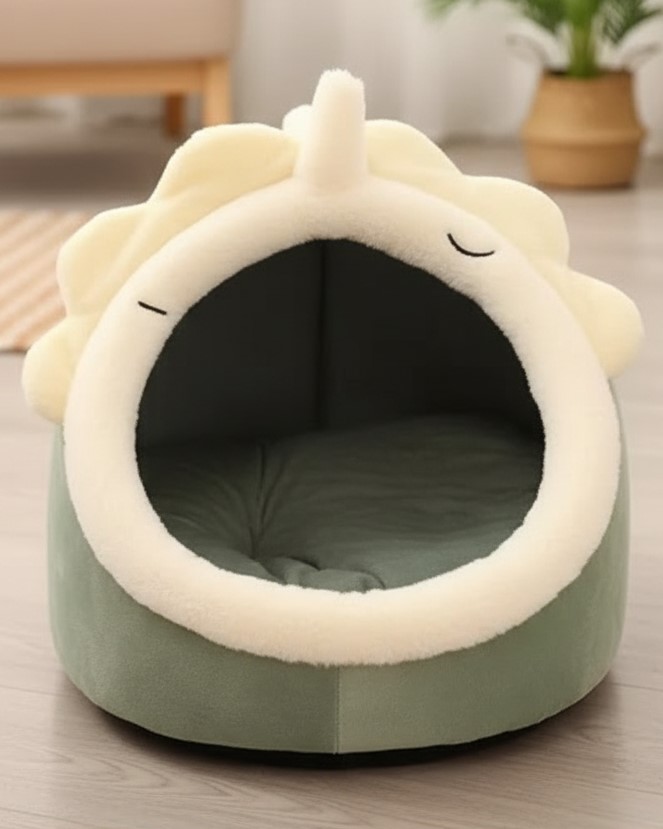
Some pets need more secure resting environments. Check our our enclosed beds for cats and small dogs- Nest Swing Bed, Cova Beds- Dino and Whale.
Open vs enclosed pet bed: key differences
Open beds:
✔ Easy access
✔ Better for hot climates
✔ Suitable for relaxed pets
✘ Less sense of security
Enclosed beds:
✔ More private
✔ Better for anxious pets
✔ Encourages longer rest
✘ May take time to adapt
Which one is right for your pet?
Choose enclosed if your pet:
- hides under blankets or furniture
- prefers corners or covered spots
- shows signs of restlessness
Choose open if your pet:
- sprawls openly
- prefers cooler surfaces
- is already comfortable in open spaces
Benefits of enclosed pet beds
Once a pet finds a space that feels:
- safe
- predictable
- theirs
They tend to return to it consistently.
That’s when a bed becomes part of behaviour.
Not just furniture.
Is an enclosed bed better for anxious pets
If your pet ignores beds but seeks enclosed spaces…
the issue isn’t comfort.
It’s structure.
An enclosed bed isn’t just softer.
It’s more aligned with how many pets actually choose to rest.
Explore the cove-style pet beds (whale & dinosaur) designed for comfort, security, and calm behaviour.
FAQs:
Do pets prefer enclosed beds over open beds?
Some do, especially pets that seek corners, hide under furniture, or prefer covered spaces. Others are comfortable with open beds.
Are enclosed pet beds good for anxious pets?
They can be. Enclosed beds create a more secure, defined space, which may help pets feel calmer.
Do enclosed beds get too warm?
They can retain more warmth than open beds, which is why placement and material choice matter, especially in warmer climates.
How do I know which bed my pet will use?
Observe where your pet naturally rests. If they prefer enclosed or hidden spots, an enclosed bed is more likely to be used.