
How to Keep an Indoor Cat Active in an Indian Apartment
8 min read · House of Furs Editorial
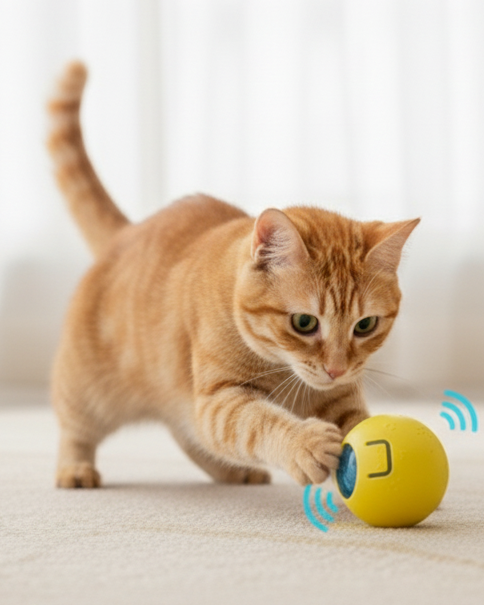
Indoor cats in Indian apartments need structured daily movement and hunting-style stimulation to prevent weight gain, boredom, and behavioral issues. Short treadmill sessions, reactive toys, and scheduled play blocks are more effective than passive comfort.
Why Do Indoor Cats Gain Weight So Easily?
Indoor cats gain weight because they consume consistent calories but expend very little energy compared to free-roaming cats.
In apartment environments:
No territory patrol
No real hunting
Limited vertical challenges
Irregular play sessions
Many Indian pet parents underestimate how little their cat actually moves during the day.
Comfort without activity leads to obesity.
How Much Exercise Does an Indoor Cat Actually Need?
Most indoor cats require at least 15–30 minutes of structured activity daily, divided into short hunting-style bursts.
Cats are not endurance runners.
They prefer:
Short sprints
Pounce-and-rest cycles
Sudden reactive movements
Structured play sessions are more effective than leaving toys scattered around.
Can a Cat Treadmill Help With Apartment Living?
A cat treadmill provides controlled indoor movement, especially for overweight or low-activity cats in compact homes.
In Indian metro apartments:
Outdoor roaming is risky
Balcony play is limited
Supervised leash walking is rare
A cat treadmill for indoor exercise allows gradual conditioning:
5–10 minute sessions
Low-speed walking
Supervised introduction
Consistency matters more than duration.
Why Do Reactive Toys Work Better Than Soft Plush Toys?
Reactive toys stimulate a cat’s prey drive by mimicking unpredictable movement, which triggers natural hunting behavior.
Static toys quickly lose interest.
More effective options include:
Motion-activated rolling balls
Bird-sound interactive balls
Reflex-trigger toys
Devices like interactive smart balls for cats maintain curiosity because movement is irregular.
Unpredictability sustains engagement.
What Is the Benefit of a Wack-a-Mole Style Toy?
A Wack-a-Mole toy simulates prey emerging from hiding, encouraging pouncing reflexes and rapid reaction training.
This type of toy supports:
Coordination
Agility
Mental focus
Energy bursts
An interactive cat Wack-a-Mole toy creates structured engagement sessions that mimic hunting cycles.
Short 5-minute sessions are highly effective.
How Should You Structure Daily Activity Indoors?
Daily activity for indoor cats should combine movement, stimulation, and rest in predictable cycles.
Example routine:
Morning:
5-minute treadmill walk
Short reactive toy session
Afternoon:
Independent motion ball play
Evening:
Interactive pounce toy session
Predictable cycles reduce midnight hyperactivity.
Can Interactive Play Reduce Night Zoomies?
Yes, structured evening activity reduces late-night zoomies by releasing stored energy before rest hours.
Many Indian apartment residents experience:
2 AM running
Sudden furniture climbing
Loud meowing
These behaviors often indicate insufficient daytime stimulation.
Evening structured play resets the cycle.
What Mistakes Should Indoor Cat Parents Avoid?
The most common mistake is assuming comfort equals contentment.
Avoid:
Overfeeding without activity
Leaving toys unused for weeks
Ignoring gradual weight gain
Skipping enrichment rotation
Indoor cats require intentional stimulation.
Safety alone is not fulfillment.
When Should You Consult a Vet?
Veterinary advice is necessary if your cat shows rapid weight gain, lethargy, or resistance to movement.
Exercise tools support wellness but cannot address:
Hormonal issues
Chronic pain
Metabolic conditions
Early intervention prevents complications.
Key Takeaways
Indoor cats in Indian apartments need structured activity.
Cat treadmills provide controlled movement.
Reactive toys sustain hunting instincts.
Wack-a-Mole toys improve reflex engagement.
Short, predictable sessions outperform passive play.
An active indoor cat is healthier, calmer, and less destructive.