
Automatic Pet Feeder vs Manual Feeding: What Actually Works Better?
5 min read · House of Furs Editorial
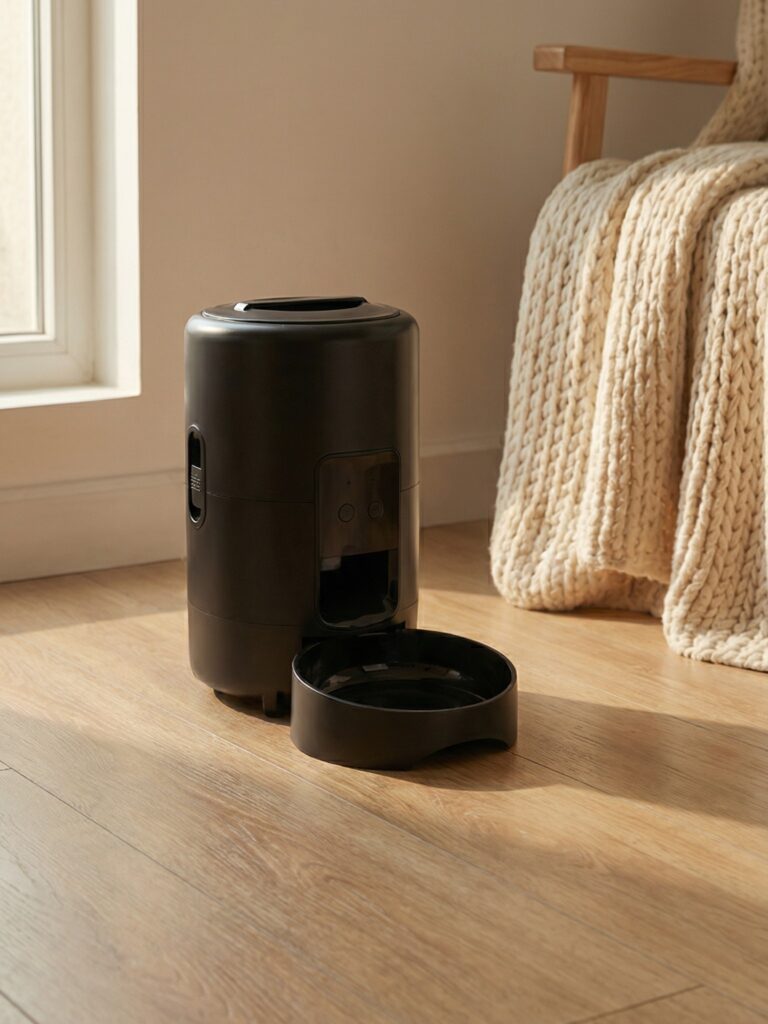
Most pet parents don’t think much about feeding.
Until it becomes inconsistent.
Late meals. Missed timings. Portion guesswork.
That’s when the question comes up:
Should you switch to an automatic pet feeder?
Manual feeding: simple, but inconsistent
Manual feeding works well when:
- you’re always home
- your schedule is fixed
- feeding times don’t shift
But in reality:
- work hours change
- delays happen
- portion sizes vary
Over time, this creates:
- irregular feeding patterns
- overeating or undereating
- dependency on your presence
Benefits of automatic pet feeders
An automatic pet feeder removes human inconsistency.
It allows:
- fixed meal timings
- controlled portion sizes
- feeding even when you’re not home
Instead of:
“Did I feed them yet?”
You get:
A system that runs on schedule.
Irregular routines can sometimes contribute to restlessness. Read our journal on separation anxiety and how to deal with it.
Why feeding consistency matters for pets
Pets adapt to routines.
When feeding times shift:
- behaviour becomes unpredictable
- hunger patterns get disrupted
- anxiety around food can increase
A consistent system solves this at the root.
Feeding consistency is often overlooked in new pet setups. Explore our journal on new pet parents to understand the nuances.
Manual feeding vs automatic feeder: key differences
Manual feeding:
✔ Flexible
✔ Personal interaction
✘ Inconsistent timing
✘ Portion variation
Automatic feeding:
✔ Consistent schedule
✔ Portion control
✔ Works when you’re away
✘ Requires setup
The trade-off is clear.
Convenience vs control.
This is where an automatic pet feeder becomes useful for everyday consistency.
Is an automatic feeder worth it in India?
It’s worth considering if:
- you have an unpredictable schedule
- your pet eats at irregular times
- you want better portion control
- you’re away during feeding hours
If you’re always available and consistent, manual feeding works.
But most pet owners aren’t.
The bigger shift
This isn’t about replacing interaction.
It’s about removing inconsistency.
You still:
- refill
- monitor
- engage
But the system handles the repetitive part.
Final thought
Feeding should not depend on whether you’re available at that moment.
It should happen reliably.
If you’re trying to bring structure to your pet’s feeding routine, an automatic feeder is not just convenience.
It’s consistency.
Explore the automatic pet feeder designed for scheduled, portion-controlled feeding.
FAQs:
Are automatic pet feeders safe for daily use?
Yes, when used correctly. Most feeders are designed for consistent scheduling and controlled portions, which can actually improve feeding habits over time.
Do automatic feeders overfeed pets?
No, they typically help prevent overfeeding by dispensing fixed portions at set times, reducing guesswork.
Is an automatic feeder worth it if I’m usually at home?
If your schedule is consistent, manual feeding works. But if timings shift often, a feeder helps maintain routine without relying on you.
Can I use an automatic feeder for both cats and dogs?
Yes, most feeders work for both, as long as portion size and kibble type are suitable for your pet.